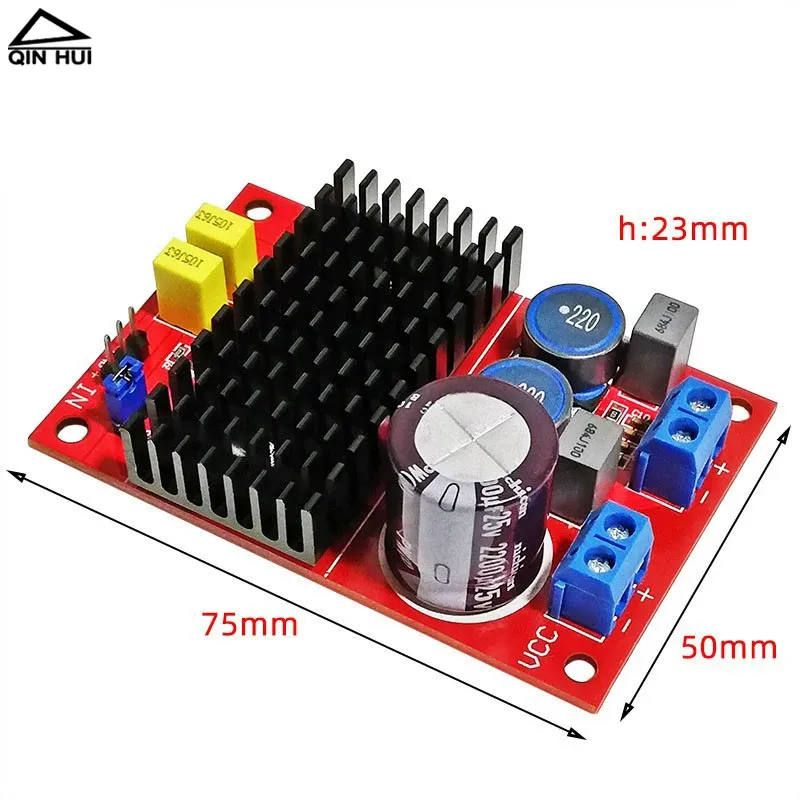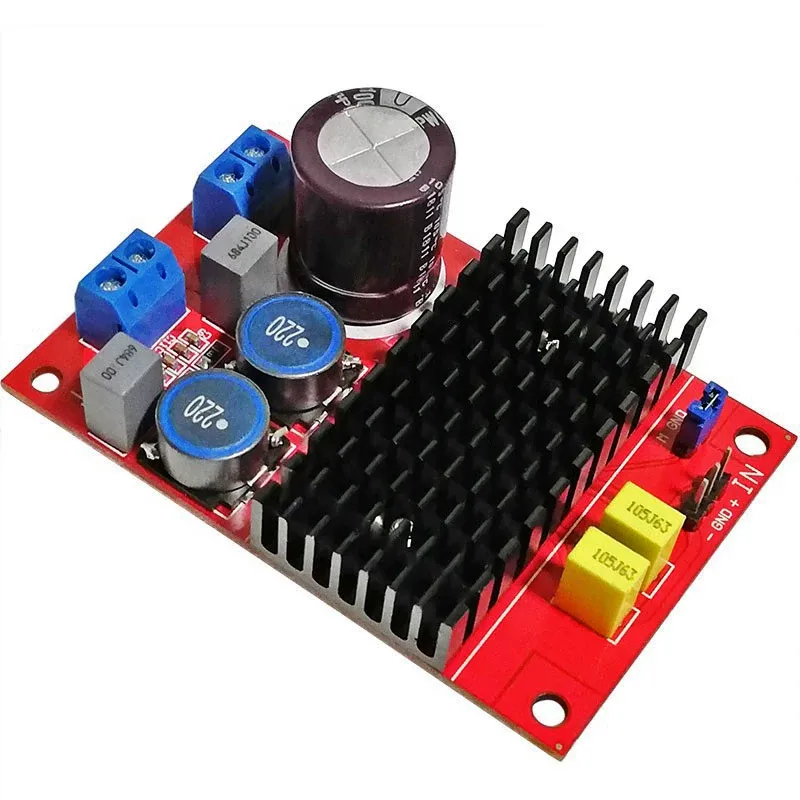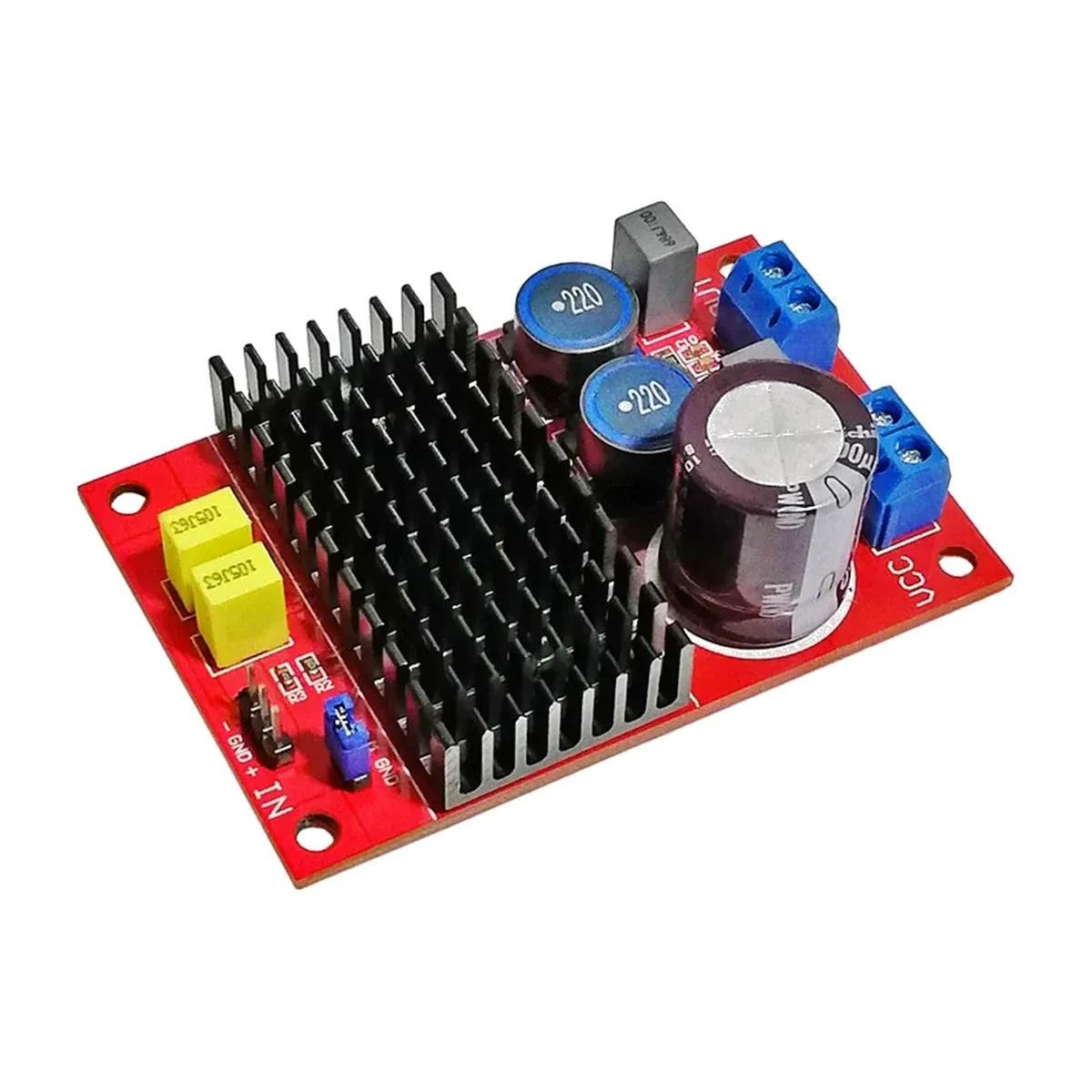
TPA3116D2 Digital Amplifier Board Mono 100W High Power DC5-24V Wide Voltage Differential Anti-Interference Input 3300UF Filter DIY Subwoofer Amplifier Mainboard
Brief Description
TPA3162 Mono Digital Amplifier Board, 100W Output Power, Differential Anti-Interference Signal Input, 3300UF Imported Quartz Filter Capacitor, DC5-24V Wide Voltage, DIY Audio Amplifier Mainboard.
Quantity
Product Overview
This mono digital amplifier board uses a brand-new, original imported TPA3162 chip, delivering up to 100W output power (with 24V supply driving a 2Ω speaker), with powerful drive and excellent control for subwoofers. The signal input supports differential connection (Signal+, Signal-, GND), effectively suppressing interference over long cable runs, while the onboard 3300UF imported quartz filter capacitor ensures stable power supply during large dynamics.
Technical Specifications
| Item | Specification |
|---|---|
| Main Control Chip | TPA3162 (Mono Class D) |
| Output Power | 100W (24V supply, 2Ω load) |
| Supply Voltage | DC 5-24V |
| Input Mode | Differential input / Unbalanced (single-ended) input |
| Filter Capacitor | 3300UF Imported Quartz Capacitor |
| Dimensions | 75×50mm, overall height 25mm |
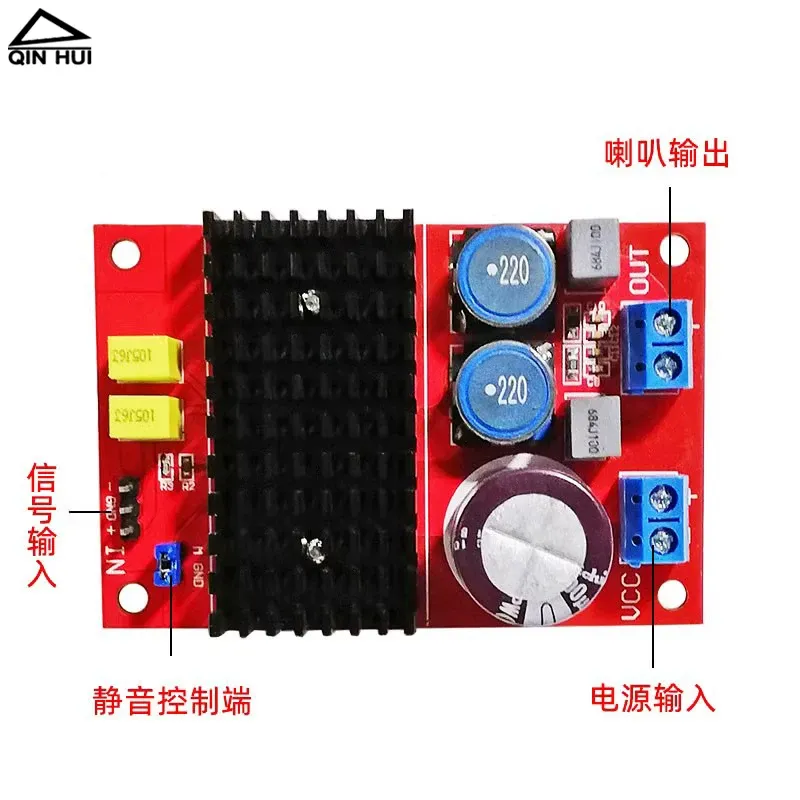
Interfaces and Wiring Instructions
The speaker output, power input and mute control pins are all labeled with silkscreen markings. For differential wiring, solder according to "Signal+ / Signal- / GND"; when using a single-ended audio source such as a phone, be sure to short "Signal-" to GND, otherwise the sound will be abnormal and in severe cases the chip may be damaged.
FAQ
Q: What should I do if there is noise when plugging in my phone directly?
A: For single-ended input, the signal negative must be shorted to GND — this is the most common wiring issue; using a shielded audio cable is also recommended.
Q: Can it drive a subwoofer?
A: Yes. The mono high-current output is particularly suitable for 6.5-10 inch woofer units; a 19-24V power supply is recommended for maximum power.
Q: Is it normal for the board to get warm during operation?
A: Class D amplifiers are highly efficient; being warm to the touch at normal volume is fine. For high-power, long-duration operation, adding a heatsink or fan is recommended.